
Contents
I see a future in business for a combination of low-code platforms and AI-assisted programming. The choice of a particular solution should follow the process requirements, control over data and the ability to maintain the application after launch.
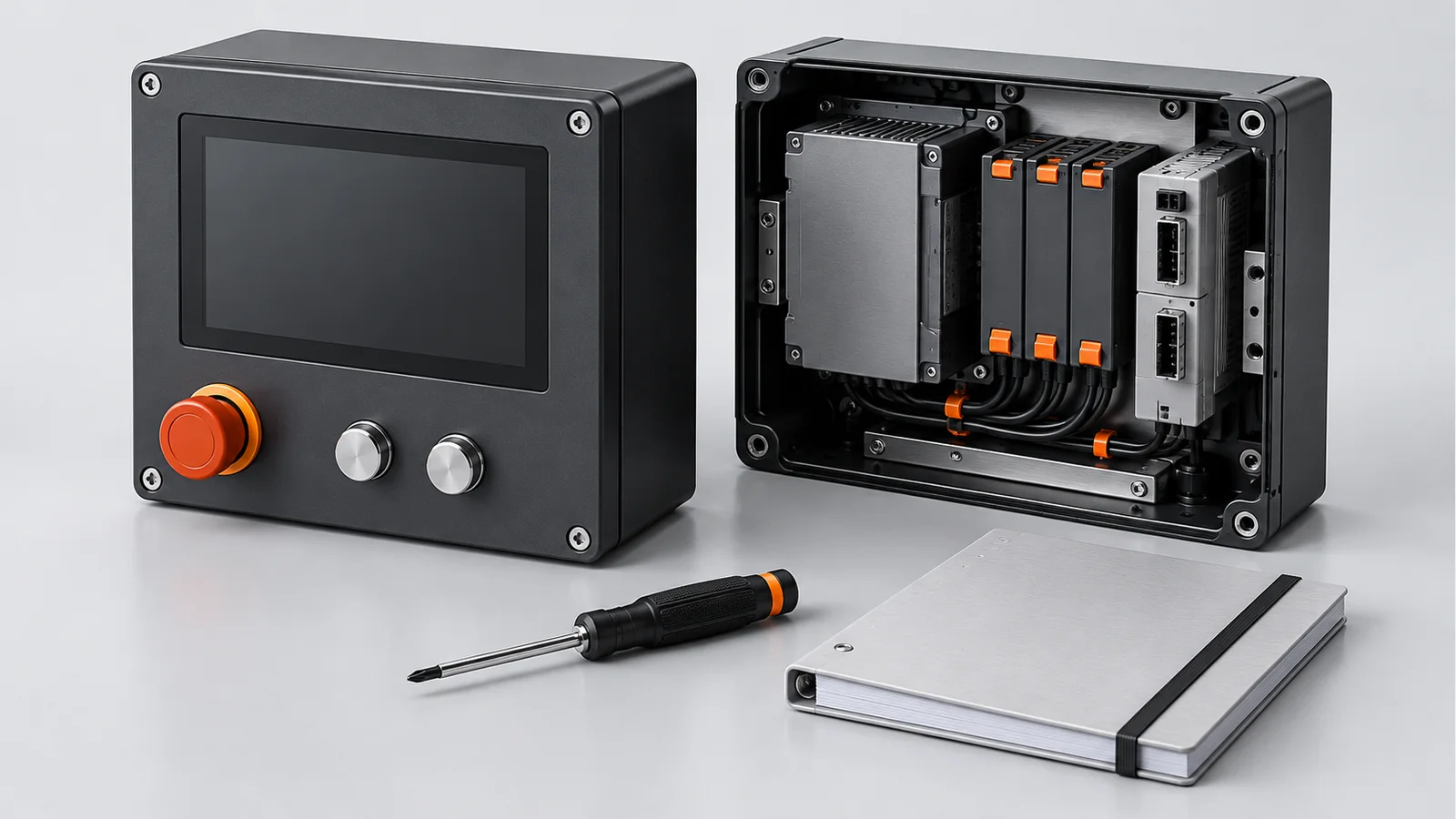
Suppose an operations team has built an app for reporting equipment faults. The form works, photographs are saved and the manager can see the list of issues. The team wants to use it from next week. Questions then arise: can staff at another plant see the same reports, who will fix a faulty change, and what happens when the person who built it leaves?
I value that prototype. It provides a quick way to check whether we understand the need. Before agreeing to launch, I would also need answers about everyday operation and accountability. The first working screen is one stage in that process.
What are we comparing?
Low-code means building applications with ready-made components and models, with the option to add code. No-code reduces the need to write code within its supported scope. Both approaches have boundaries set by the particular platform.
Vibe coding describes a working method: I tell AI the behaviour I want, check the result and request further changes. The term is also used more broadly, so here I distinguish it from engineering work in which a person additionally controls the architecture, understands the important code and verifies the security measures.
These approaches can coexist. AI can change a low-code application model, while code generated through conversation can run on a managed platform. I would compare the actual architecture and the team’s working practices rather than choose between those labels.
Products are combining them
Power Apps code apps allow custom web applications to run on the Power Apps platform. Lovable allows a project’s code to be inspected, edited and downloaded, while Bolt combines conversational building with GitHub version control. A company can therefore use a generator while retaining access to code and change history.
I would separate the availability of a feature from claims about its effectiveness. A supplier’s statement that an agent can build an application does not establish the cost of adapting it to our process. That needs testing in our own trial.
Where I would look for uses
I would consider Power Apps for forms and operational tasks in a company working in the Microsoft ecosystem. I would assess AppSheet for similar needs in a Google environment and applications based on tabular data. In both cases, the data, permissions and working practices must fit.
Bubble, Lovable, Bolt and Replit also deserve separate assessment. They differ in how applications are built, hosted and developed outside the tool. Bubble’s documentation distinguishes data export from application portability: leaving the platform requires rebuilding the application logic. That dependence can be acceptable when the benefits and commercial terms justify it.
I would consider tools such as Cursor, Claude Code, Codex and GitHub Copilot for a team developing its own code. The company then needs people who can assess changes, diagnose faults and take over maintenance. Possession of a repository does not provide that capability on its own.
This is how I would make an initial shortlist. A trial on a real process is needed to assess a particular product’s fit. I would not assume that an internal tool is automatically low risk. A panel changing production parameters may need more control than a public contact form.
| Tool family | Where I would consider a trial | What I would check before choosing |
|---|---|---|
| Power Apps | Forms and processes within the Microsoft ecosystem. | Licences, roles, integrations and behaviour under greater load. |
| AppSheet | Operational tasks based on tabular data, including Google environments. | Data source access, security filters, synchronisation and offline operation. |
| Bubble | Web applications where its runtime is acceptable. | Data export and the cost of rebuilding logic outside the platform. |
| Lovable, Bolt | Conversational app building with the option to continue working with code. | Backend, data, dependencies and practical portability. |
| Replit | Building and running AI-assisted applications in one environment. | Permissions, operating charges, change control and maintenance handover. |
| Cursor, Claude Code, Codex, GitHub Copilot | Custom code developed by a team able to assess and maintain it. | Change review, tests, dependencies, secrets and agent permissions. |
An opportunity in the IT queue
I see the greatest opportunities in needs that are too small for a separate project yet consume several people’s time. Someone rekeys data between systems, a manager assembles reports from multiple files, or a team tracks exceptions through email. A bounded application can help if it has access to the right data and a clear scope.
A person who knows the process can build a prototype and explain the need sooner. IT then has a better basis for discussing integrations and rules. The team must agree when an experiment needs the involvement of those accountable for technology and data. I also discuss this cooperation in IT as a business partner.
Not every need warrants another application. In the fault reporting example, I would first check whether an existing system already supports the function. An additional tool may bring another user list, copy of data and integration to maintain.
Does access control work?
In the fault reporting trial, I would sign in as an employee at each plant, a manager and an administrator. I would test reading and changing data, including direct requests outside the interface. Hiding a button does not protect an operation if the server still permits it.
Platforms provide security mechanisms that need correct implementation. Google notes that AppSheet security filters are not a complete security solution and that sensitive operations also need protection at the data source. Replit describes further responsibilities for application builders, including authorisation and protecting secrets. GitHub recommends reviewing and verifying code prepared by agents.
The autumn 2026 Veracode benchmark update reports improved security results alongside continuing weaknesses. It tested 18 models, four languages and four vulnerability categories. This is an assessment of specified code generation tasks, not a measurement of the proportion of unsafe business applications. I would not use it to predict the probability of our application failing.
I would therefore complement functional testing with checks on permissions, error handling, dependencies and recovery. Retries also matter for operations that write data: an interrupted connection should not create a duplicate order or approve the same operation twice.
Who takes responsibility?
Prototype
Builder and process owner
Check whether the solution meets the need. Test data, bounded scope and criteria for further work.
Trial
Business, IT and relevant control functions
Check tasks, permissions, data, exceptions and operating cost. Document the trial’s limitations.
Launch
Business and technical owners
Agree scope, support, monitoring and recovery. A second person tests taking over the solution.
Maintenance
Those accountable for outcomes and technology
Review the outcome, updates and incidents, and decide on further development, migration or retirement.
A proposed division of work. Controls depend on the consequences of failure and the process requirements.
Costs after the first month
The licence price or tokens used for a prototype provide only part of the picture. I need the cost of launch, recurring charges and maintenance work. I separately assess the cost of changing scope and leaving the solution.
Charging models vary. Replit describes publishing costs that depend on deployment type and resource use. For platforms, I also check users, environments, data and integrations. Administrative features may require a different plan from the one used for the trial. Running custom code outside the generator requires hosting, updates and error handling.
I do not assume that custom code will be cheaper or that a platform will cost more. A comparison should cover the same scope, load and availability requirements. I value existing staff time separately from additional expenditure to avoid double counting. The IT budget model helps document those assumptions.
Calculate maintenance
Two hypothetical options. Starting values illustrate the calculation; they are not prices or measurements of a particular tool.
Complete every field with a non-negative number. Results require valid assumptions.
Option A · Cost model
168,000 PLN- Launch
- 12,000 PLN
- Charges over period
- 108,000 PLN
- Value of maintenance work
- 48,000 PLN
Launch and charges: 120,000 PLN
Staff work: 240 h
Option B · Cost model
180,000 PLN- Launch
- 24,000 PLN
- Charges over period
- 36,000 PLN
- Value of maintenance work
- 120,000 PLN
Launch and charges: 60,000 PLN
Staff work: 600 h
PLN excluding VAT, nominal values. Model = launch + months × monthly charges + months × maintenance hours × hourly value. Launch and charges mean additional expenditure here; hours relate to existing staff work. Do not count the same cost in both parts. Excluded: migration, disruption consequences, inflation and discounting. This is part of an economic assessment, not full TCO or ROI.
Can we leave it?
Before choosing, I would ask for a handover exercise. A second person receives the documentation and recreates the application in an agreed environment. They check the data, sign-in, integrations and how to deploy a change. If the company wants the option to migrate, the exercise should also cover dependencies on supplier services.
Custom code may make leaving easier, but the database, user accounts, stored files and external services remain. Exporting the frontend does not automatically move those elements. Likewise, hosting a platform ourselves does not remove dependence on its licence and runtime.
A current example of product change risk is the retirement of Power Apps Vibe. Microsoft states that these apps remain accessible until 30 November 2026 and describes rebuilding them in other tools. This concerns the Vibe service, not the entire Power Apps platform. The migration guidance requires checking functionality and data connections again.
I would therefore want a specific exit procedure and an accountable person. A general assurance that “we have an export” leaves too many unanswered questions.
What has a future in business?
I expect further combinations of AI generators, visual models and custom code. This is my assessment of the direction suggested by current products. It does not establish which supplier will retain an advantage or how quickly costs will change.
Companies may gain more freedom to develop tools close to the process. IT teams can provide shared elements, such as data access and a controlled deployment method, while the business tests usefulness sooner. Companies will also need to retire applications that duplicate functions or fail to deliver the intended outcome.
I would not use a single productivity improvement percentage to justify such a programme. In its 24 February 2026 update, METR highlighted difficulties with participant selection and measuring work using newer AI tools. The outcome needs assessing in the team’s own conditions, including verification and rework time.
I would return to the fault reporting app with a specific plan: a bounded trial, checks on data and permissions, agreed maintenance and a handover to a second person. When those conditions are met, building the prototype quickly can shorten the route to a useful application. After launch, the process owner continues to assess its effect and the technical owner is accountable for the agreed maintenance.
Sources and next steps
I checked supplier documentation and announcements on 2 November 2026. They describe product features and limitations; they are not an independent comparative trial. Veracode supplies security tools and its benchmark covers the specified scope. The fault reporting example is hypothetical. The cost model’s starting values are assumptions unrelated to supplier prices.
Before your own trial, you can use the AI use case assessment record. It helps document ownership, measures and the rationale for further work. To discuss a particular process, describe the current workflow and the problem to solve.